Last modified on October 28, 2026
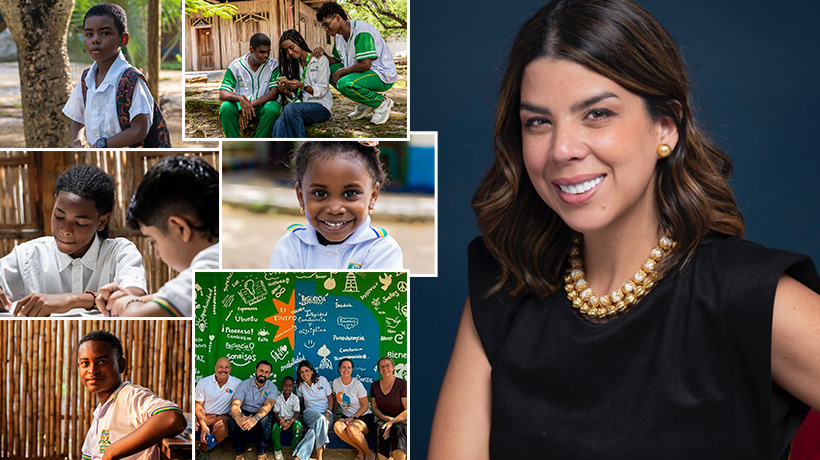
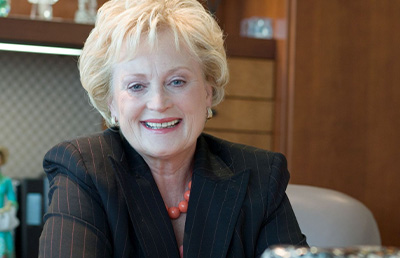
Since 1998, Christel House International has helped children overcome poverty through no-fee schools that combine education, nutrition, healthcare, social-emotional support, and college and career readiness. For 60 years, Fundación Santo Domingo (FSD) has advanced health, education, and community development across Colombia. Now, through a partnership with Christel House International, FSD’s Colegio Barbacoas on the island of Barú will become Christel House Colombia in January 2027. We recently spoke with Catalina Pimienta Gómez, the school’s incoming CEO, about her vision for Christel House Colombia and the opportunities ahead for its students and community.
You are an attorney by training, and you have worked in public and private sectors. What, in your opinion, is the power of partnerships?
Catalina: I think that the greatest power of partnership is that these allow us to solve problems that no organization could solve alone. As you say, my background in law and public policy in the social sector has taught me that complex social challenges are rarely solved by only one institution having all the answers. They require different capabilities, different perspectives, and, most importantly, a shared purpose. And for me, that shared purpose in a real partnership is not simply dividing responsibilities. It’s about bringing together complementary strength, being willing to build something that neither partner could have built independently.
So, what excites me about this partnership with Fundacion Santo Domingo (we call them FSD in short) is that they bring extraordinary knowledge of Colombia, the Caribbean region, the community, and the local ecosystem we work with here in our country. Christel House brings a big, proven whole-child model, a long-term perspective on students’ lives, and the experience of a global network. Our responsibility here in Christel House Colombia is to create a bridge between those strengths. And, that’s what I’ve been always working towards – tendering bridges between different partners. A partnership becomes powerful when the purpose is stronger than the individual organizations around the table.
This is a great segue into my next question – How do you see the partnership between FSD and Christel House contributing to Colombia’s growth as a nation?
Catalina: I am often asked this question. This partnership is about human capital and social mobility. Colombia has incredibly talented, young people, but opportunities are still deeply unequal. Where a child is born can have far too much influence on the opportunities that child has later in life. I always believe that education has the power to change that, but only if we think beyond access to school. The opportunity I see in the partnership between FSD and Christel House is to demonstrate what can happen, when high-quality education is combined with health, social emotional support, family engagement, and clear pathways from school to university. In Colombia, students acquire technical education or go directly to employment. So, we need to clarify that pathway – that pathway, and this holistic model is what makes the difference. Also, what is particularly interesting, of course, is that we are not simply bringing an international model into Colombia. We are combining global experience with something important – local knowledge. If we can learn from Barú, from Barbacoas, demonstrate results and understand what elements can be adapted elsewhere, our impact, then, could extend well beyond one school.
The ambition is not simply to educate children. It is to help create different trajectories for them, giving them opportunities to see different life trajectories.
You spoke about learning from communities. I’m curious to understand what your experience has been on that front, while you’ve been drawing from the strengths of both FSD and Christel House in this partnership.
Catalina: FSD has years of relationships, credibility, knowledge, and territory. They understand their community, their families, their school, the local context, and the broader development ecosystem in Colombia. Christel House brings this very clear philosophy about what it takes for a child to succeed over the long term, to break that cycle of poverty in one generation. Our role in Colombia is not to choose one approach over the other. It is to ask how we can take the best of both and create something Colombian. So that requires a lot of listening, humility, and very honest conversation.
Here we are not starting with an empty building or an empty community. We are arriving at a school that has 30 years of history, teachers who are committed, families who care about the education of their children, and a community that has developed a strong relationship with the school. I see this as an enormous asset, and also a big responsibility. We will never arrive anywhere believing that we are coming to fix everything. We need to understand what is already working, and then protect it, and to build from there.
Communities are not beneficiaries of the school. They are natural partners in success. They understand things that we cannot learn from Excel, from spreadsheets. They know what family values their children experience, what creates trust, what creates resistance, and what aspirations can exist for the future. We want those families, those teachers, those students to have a voice in the evolution of the school. From practical issues to questions about identity, culture, and aspirations. That why I often say that before we build classrooms, we need to build trust. In Barbacoas, in our school in Barú, there is already a foundation of trust that we can build upon.
You spoke about the advantages of having the Barú community as part of the school already. How do you see this partnership integrating them into the success of the school?
Catalina: Probably, the most important thing I’ve learned this month is not to confuse vulnerability with lack of ambition. The families I have met in Barú have enormous aspirations for their children. They do not want charity. They want opportunities, dignity, and, of course, a good education for their kids. And these kids are incredibly already aware of the possibilities they want for their lives.
Another important thing is the value of local knowledge, as I told you. Sometimes, from big cities like Bogota, or from the perspective of an international organization, something may seem like a simple operational solution. When you arrive at the island, you understand that realities of transportation, connectivity, infrastructure, family dynamics, as well as employment. So suddenly the solution must look very different. This has reinforced something that I strongly believe, and I’ve been applying all these months – that we need to move slowly enough to listen, but fast enough to be ready for January. That practically means involving the community in a process that affects them. For example, as we evolve the school’s identity, and even things such as uniforms, we want teachers, students, and families to participate, rather than simply receiving a final decision. It also, of course, is using data, but never allowing data to replace their voices.
I hope that listening becomes part of the operating system of Christel House Colombia, and not something we do only for that transition. It should be the foundation of all operations.
You said something powerful – we must not confuse vulnerability with a lack of ambition. This aligns with what Christel House stands for, too. Could you elaborate on this learning, and talk about some of the other lessons you have taken away from your work? And how do you think some of that could be integrated into how this particular school functions?
Catalina: To communities in deep poverty, the government usually hands out a stipend or some sort of a scholarship. But, ours is a holistic model that helps young people to know their options.
A child can be in school for many years, and still face enormous barriers later – learning gaps, socioeconomic pressures, limited exposure to careers, difficulty accessing higher education, or simply not having the networks and guidance that other young people take for granted. These challenges become more significant for children growing up in vulnerable communities. That’s why the Christel House models resonate so much with me, because it recognizes that academics alone is not enough. A student may need excellent teachers, but that same students may also need health support, social-emotional support, to have strong relationships with their family, to receive mentorship and exposure to different careers, and to know a world far away from where they live. We need to help them navigate what comes after graduation. I think that final piece is particularly important because success cannot simply be getting a child to graduation day. That’s a number, a check mark. The real question is what happens after graduation day. And that’s where the long-term nature of our model can be incredibly powerful.
Tell me a little bit about the challenges that Colombia’s youth currently face in education, and how the Christel House model can help change that.
Catalina: Our problems will not be solved by providing education because education alone will not translate into opportunity. This holistic model is important because, while the starting point is an excellent education, children have not yet lived the rest of their when they come to school. We need to see the child behind the student, and understand what is happening to her.
Education in Colombia, and especially in these communities that are so vulnerable, lacks good infrastructure. They don’t have the best starting points. There isn’t adequate connectivity. And, teachers, too, need to be well paid, and must be well-prepared. For all these reasons, the Christel House mission motivates me to grow it. Real success is upward economic mobility, and living lives where children know how to navigate the world after graduation.
Once this school starts, five or 10 years into the future, where do you see your students and what is your hope for them?
Catalina: Five or 10 years into the future, I hope to see something that is difficult to measure on a dashboard. Possibility. For our younger students, I hope they can see much bigger horizons for themselves. For our older students and graduates, I hope they can access universities, technical education, or jobs with real prospects of growth. But more than any particular destination, I want them to have choices. I want a student in Barbacoas to be able to see what he can do with his life. Of course, there will be academic preparation, confidence-building, and networks that can support him to pursue his dreams.
I also have ambitions for families. I hope siblings can look up to their big brothers and sisters and wish to follow in their footsteps. If we achieve this, there will be a change through generations.
As a CEO, my biggest hope is that five years from now or 10 years from now, we’re no longer talking only about what Christel House brought to Barbacoas and to Colombia, but also what Colombia and Barbacoas are bringing to Christel House and can teach for the rest of our global network. Our goal is not simply to educate children; it’s to help them create different life trajectories.
Follow Nethra and her day at Christel House India

From "Classrooms to Life" is now streaming worldwide
Christel's Dream
CATALINA PIMIENTA GOMEZ NAMED FOUNDING CEO OF CHRISTEL HOUSE COLOMBIA
CHRISTEL HOUSE INTERNATIONAL LAUNCHES NEW DOCUMENTARY, “FROM CLASSROOMS TO LIFE”
FUNDACION SANTO DOMINGO AND CHRISTEL HOUSE INTERNATIONAL ANNOUNCE HISTORIC ALLIANCE TO TRANSFORM EDUCATION IN COLOMBIA
CHRISTEL HOUSE EXPANDS TO TWO COUNTRIES, SELECTED AS CLINTON GLOBAL INITIATIVE COMMITMENT MAKER
TANESHIA STONEY DRYDEN NAMED CEO OF CHRISTEL HOUSE JAMAICA