
Last modified on May 20, 2026
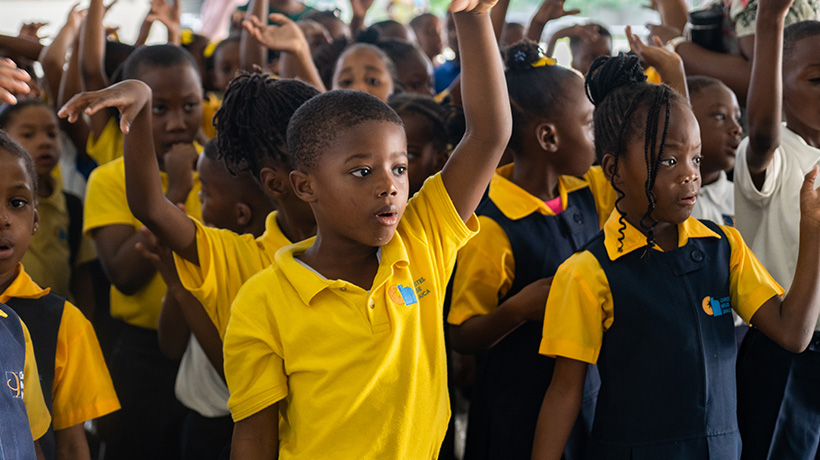
Continuous improvement is embedded in how Christel House schools learn and grow together. One of the most powerful tools we use to ensure positive progress is our peer review process, a collaborative approach that brings Christel House educators and leaders together across our global network to examine practice, identify strengths, and set a clear path for improving outcomes for students across all our schools. This blend of perspectives ensures the review process is locally grounded and globally informed. Recently, a Christel House team led a follow-up peer review at our Jamaica campus. Facilitated by Senior Vice President of Academics Morty Ballen and Senior Director of Academics Annabelle Hardy, the review brought together leaders from across the global network, including Jason Scott, Jamaica Principal; Tracy Westerman, Chief Academic Officer at Christel House Indianapolis; and Gina Reyes, High School Principal at Christel House Mexico. For school leaders like Scott, the experience often brings a change in thinking. “For me, the shift came when I stopped trying to defend what we were doing and instead became open to mapping perspectives together,” he shares. “It was about seeing how new perspectives could help us move forward.” That mindset is central to Peer Review: moving beyond instinct and toward shared problem-solving that strengthens practice and improves student learning.
At its core, peer review helps each school focus on a small number of clear, high-impact priorities that guide improvement over time. Through classroom observations, conversations with students and staff, and a close look at academic data, school leaders gain a fuller picture of what’s working and where they can grow. Just as important, the process connects educators across countries, creating space to share ideas, challenge assumptions, and bring back stronger practices to their own schools.
In Jamaica, that focus is translating into real progress for students. Between 2023 and 2025, the percentage of Grade 6 students passing the national PEP exam increased significantly compared to these students’ earlier performance in Grade 4. In Language Arts, the pass rate more than doubled, rising from 22.3% to 55.0%. In Mathematics, the pass rate increased from 16.7% to 41.0%. As Ballen notes, “From peer review one to the follow-up, the growth at Christel House Jamaica has been dramatic, especially in culture and professional development. What stood out was hearing leaders articulate a shared global instructional model.”
These results reflect what peer review is designed to achieve: stronger schools, more aligned teaching, and better outcomes for students. Across Christel House, when educators come together with openness and purpose, the impact is clear in classrooms, in leadership, and most importantly, in student success.

We did it! Marathon run raises over $170K for students

Christel DeHaan Legacy
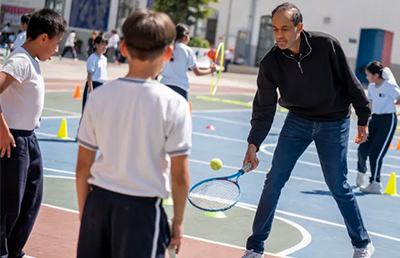
Global Ambassador Rajeev Ram visits Christel House Mexico
CATALINA PIMIENTA GOMEZ NAMED FOUNDING CEO OF CHRISTEL HOUSE COLOMBIA
CHRISTEL HOUSE INTERNATIONAL LAUNCHES NEW DOCUMENTARY, “FROM CLASSROOMS TO LIFE”
FUNDACION SANTO DOMINGO AND CHRISTEL HOUSE INTERNATIONAL ANNOUNCE HISTORIC ALLIANCE TO TRANSFORM EDUCATION IN COLOMBIA
CHRISTEL HOUSE EXPANDS TO TWO COUNTRIES, SELECTED AS CLINTON GLOBAL INITIATIVE COMMITMENT MAKER
TANESHIA STONEY DRYDEN NAMED CEO OF CHRISTEL HOUSE JAMAICA